
Colour matching paint works well for small, localized repairs when you take a physical chip to a store for a spectrophotometer reading, then test the result on a real patch before buying a full can. It’s not reliable for large faded areas or mismatched sheen. If this sounds like your situation, your first move is simple: cut a small chip from an inconspicuous spot, or buy a tester pot, and paint a 12-inch patch before committing to anything bigger.
TL;DR:
- Colour matching paint works best for small repairs on surfaces that haven’t experienced significant fading, wear, or sheen changes over time.
- Using a spectrophotometer at a store provides the most accurate color match, but off-the-shelf apps and photo comparisons are only useful as shortcuts.
- Always test a matched sample on a 12-inch patch under different lighting conditions before committing to a full application.
- Sheen mismatch can make a perfect color look off, so matching gloss levels and application techniques are equally important as color accuracy.
- For large, visible, or aged wall areas, full repainting with a professional match is more reliable than patching with a small color match.
Table of Contents
- When to Colour Match and When to Repaint the Whole Wall
- Three Ways to Match Wall Paint Colour
- How to Test a Matched Sample Before You Commit
- Why Sheen and Texture Matter as Much as Color
- Troubleshooting a Visible Patch
- What We’ve Learned About DIY Limits and Professional Painting
- Get a Guaranteed Colour Match Without the Guesswork
- Sources
When to Colour Match and When to Repaint the Whole Wall
Matching paint colour makes sense for nail holes, scuffs, small drywall repairs, and touch-ups on a wall that hasn’t seen much sun exposure or cleaning. The finish is still fresh, the base coat hasn’t shifted, and a single formula-matched patch will disappear into the surrounding surface.
It stops working well once the wall has aged unevenly. UV exposure, repeated washing, and years of ambient dust all shift a colour’s actual appearance away from its original factory formula, so matching what the wall looked like on day one won’t match what it looks like now. That’s a documented issue with colour matching against faded surfaces, and it’s the single biggest reason DIY matches fail.
Repainting the full wall is usually the smarter call when:
- The damage covers more than a few small spots or spans a visible focal wall
- Previous touch-ups used different paint brands or sheens layered over time
- You’re prepping for resale and buyers will notice patchwork under bright lighting
- The wall shows clear fading, especially near windows or under direct light
Weigh the cost of a $10 to $20 tester pot against a full gallon and a few hours of your weekend. For small jobs, matching wins on time and money. For anything visible or aged, a full repaint protects the result better than chasing a perfect match.
Three Ways to Match Wall Paint Colour
Homeowners typically try one of three approaches to match existing wall paint, and each comes with different accuracy and effort.
- Cut a physical paint chip. Use a utility knife to remove a small section, roughly the size of a small coin, from a low-visibility spot like behind furniture or inside a closet. Pro paint shops need a sample at least half a centimeter to get a readable scan, so don’t clip a flake too thin to register. Patch the removed spot with filler afterward so it doesn’t become its own repair project.
- Bring the chip to a store spectrophotometer. This is the most accurate way to colour match paint: the device reads the chip’s actual pigment and returns a formula code. Ask the associate to write the formula, sheen, and mixing date directly on the can label, since saving that information makes future touch-ups far easier to reorder correctly.
- Try a phone app or photo first. Apps and photographed samples are useful for narrowing down options fast, but screens display RGB light while paint is a physical pigment formula, so lighting and camera quality throw the result off more than most people expect. Treat any app match as a shortlist, not a final answer.
Pro Tip: Always follow up a digital or app-based match with a physical test patch. Screens lie about color more often than they get it right.
If you’re comparing paint across brands rather than reordering the same one, tools like MatchThatPaint calculate a Delta E score, a numeric measure of how close two colors actually are. A Delta E under 1 reads as visually identical to the human eye, but even a strong score still needs a mixer’s physical adjustment before it’s ready for your wall.
How to Test a Matched Sample Before You Commit
Getting a formula match is only half the job. The other half is confirming it actually blends once it’s dry and on the wall.
- Buy a sample-size pot in the exact sheen you need, not just the colour code.
- Paint a test patch at least 12 inches square in a spot that gets similar light to the repair area.
- Let it dry completely. Wet paint always looks darker and glossier than the cured result.
- Check the dried patch under at least three light sources: daylight near a window, overhead room lighting, and a lamp at night.
- View it from a few angles, since sheen shifts how visible a mismatch is depending on where you’re standing.
This 12-inch patch and multi-light check is the step most DIYers skip, and it’s the one that actually prevents a bad surprise after the full can is already open.
For water-based paints, some professionals slightly dilute the first thin coat by 5 to 10 percent to slow how fast it wicks into the surrounding surface, which improves blending at the edges. Follow that thinned coat with full-strength paint once the edge has softened. If the patch still shows a visible line after two coats, feathering the edge with a nearly-dry brush or roller usually helps more than adding a third full coat. When multiple small patches sit on the same wall, painting corner-to-corner instead of spot-touching each one gives a cleaner, more even result.
Why Sheen and Texture Matter as Much as Color
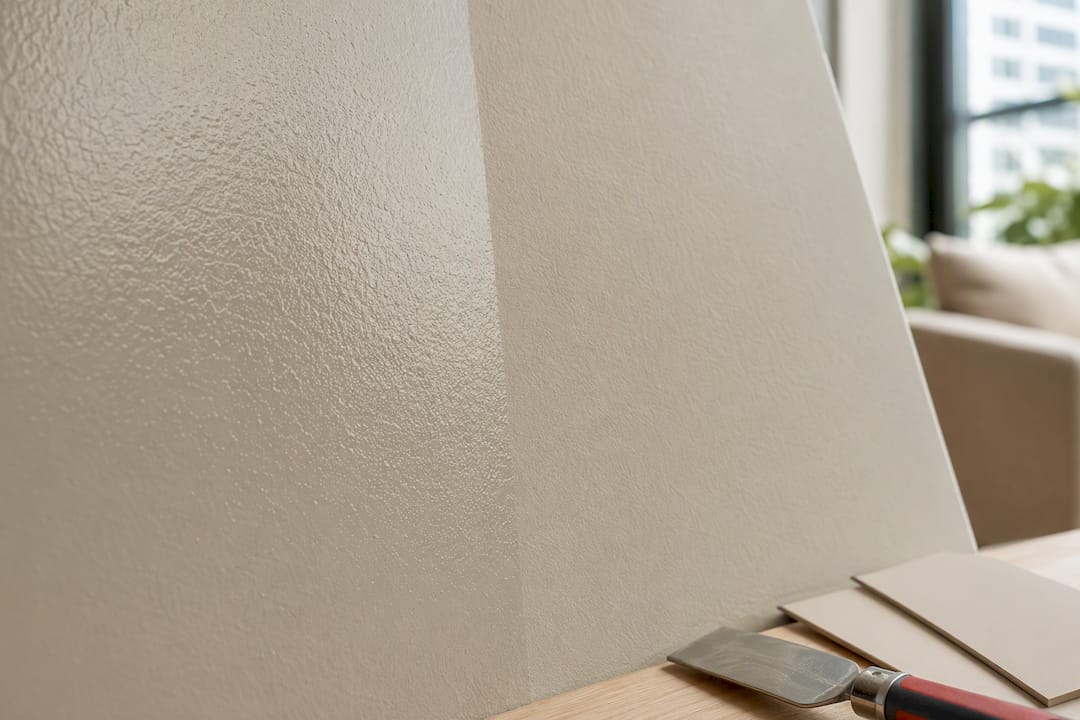
A perfect colour match can still look wrong on the wall if the sheen doesn’t match, because gloss level changes how light reflects off the surface independently of the pigment underneath.
Sheen runs from flat and eggshell up through satin, semi-gloss, and gloss, and each level bounces light differently:
- Flat and eggshell scatter light evenly, which hides minor texture but shows patchiness if the finish differs even slightly.
- Satin and semi-gloss reflect more directly, so a mismatched sheen catches the eye immediately under overhead lighting.
- Gloss is the most forgiving to clean but the least forgiving on a touch-up, since any sheen difference reads as a visible sheen halo.
Application technique matters just as much. Roller nap size, brush direction, and spray texture all leave a surface pattern that scatters light in its own way, and a touch-up applied with a different tool than the original coat can create a visible patch even in an exact colour match. Checking a sheen comparison guide before buying trim paint helps you avoid mixing sheens by accident, and our own breakdown of satin versus semi-gloss finishes covers which sheen belongs where in a typical home.
Troubleshooting a Visible Patch
If a matched patch still stands out once it’s dry, work through these causes in order:
- Faded original paint. The surrounding wall has aged past what a fresh formula can replicate.
- Wrong sheen. The formula is right but the gloss level doesn’t match the original coat.
- Drying differences. Humidity or temperature during application changed how the paint cured.
- Batch variation. Even the same formula code can shift slightly between mixing dates.
- Application technique. A different roller or brush left a different surface texture.
Pro Tip: If you suspect batch variation, bring your labeled can back to the counter and ask the mixer to compare it against a fresh sample. A small tint adjustment often solves what feathering can’t.
For minor mismatches, another thin coat or careful feathering at the edges usually resolves it. For large walls, resale-quality finishes, or repairs that involve more prep work than a simple patch, like the surface repair needed before repainting peeling areas, calling a professional saves both time and material waste.
What We’ve Learned About DIY Limits and Professional Painting
Most homeowners can handle a nail hole or a scuff mark with a tester pot and a little patience. The threshold shifts once the repair area gets large, sits at eye level in a main living space, or needs to hold up to resale scrutiny. That’s when the risk of a visible patch outweighs the savings of doing it yourself.
A reputable painting service should inspect the surface, match colour and sheen together, label the can with the formula, and back the work with a warranty. 5starpainting has spent over 30 years refining that process across HDB flats, condos, and landed homes, pairing every job with genuine Nippon Paint and a dedicated project manager who oversees the match from inspection to final coat.
— Fabian
Get a Guaranteed Colour Match Without the Guesswork
5starpainting is the practical alternative to a repeat trip to the paint counter when a repair needs to disappear completely, not just come close. Every job includes proper surface preparation, colour and sheen matching, genuine Nippon Paint, furniture protection, and post-job cleanup, all under one fixed, all-inclusive price with no hidden add-ons.

A dedicated project manager oversees the colour match from inspection through the final coat, and every job comes backed by a one-year warranty, so you’re not left wondering whether the patch will hold up once the light changes. If you’d rather skip the trial-and-error of tester pots and spectrophotometer visits, request a quote through our HDB painting packages starting from $600, or check our condo painting services starting from $950 for a full inspection and colour-match plan tailored to your home.
Sources
- How to Color Match Paint on a Wall Perfectly
- How to Color Match Paint on a Wall: Chip Sampling, Apps, and Finish Testing
- How to match paint already on a wall
- Find the Closest Paint Color Match from Any Brand | MatchThatPaint
One Response