
Breathable paint lets moisture vapor pass through the coating instead of trapping it against the wall, which is why it works so well on solid masonry and lime plaster. But it’s not a fix for active leaks. Check three things first: the substrate is dry, any water source is repaired, and the product’s SD or perm rating is backed by real test data.
TL;DR:
- Breathable paint is suitable for solid masonry, limestone, and mineral-based walls that naturally absorb and release moisture, but not for active leaks or unresolved rising damp.
- The SD value determines breathability; products with an SD below 0.5 meters are recommended for damp-prone walls, and testing the perm rating before purchase is essential.
- Applying breathable paint requires fully drying the substrate, removing incompatible coatings, and proper sealing and ventilation afterward to prevent trapping moisture.
- Mineral silicate and limewash are reliable breathable finishes, especially for historic or exterior masonry, while many interior “breathable” emulsions lack real breathability without tested SD ratings.
- Professional assessment, correct preparation, and choosing the right product based on wall condition are critical for successful application and lasting results.
Table of Contents
- What Makes Breathable Paint Walls Different From Standard Paint
- When You Should (and Shouldn’t) Use Breathable Paint
- Mineral Silicate, Limewash, Clay, and Other Breathable Options
- How Breathable Paint Is Actually Measured
- Preparing and Applying Breathable Paint Without Trapping Moisture
- How Professional Painters Approach Breathable Coatings
- Getting Professional Help for Damp-Prone Walls
- Standards and Guidance Worth Checking
- Sources
- FAQ
What Makes Breathable Paint Walls Different From Standard Paint
Breathable paint has a microporous structure. It’s full of microscopic pathways that let water vapor move through the film, out of the wall, and into the room air where ventilation can carry it away. Standard acrylic and latex paints work the opposite way. They cure into a continuous plastic film that seals the surface, which is fine for drywall in a climate-controlled condo but a problem for solid masonry or lime plaster that naturally absorbs and releases moisture with the seasons.
That difference matters most on older or solid-wall construction, where the wall itself was built to breathe. Mineral-based coatings interact with these substrates almost chemically, bonding into the surface rather than sitting on top of it. Acrylics, by contrast, often act as vapor retarders. When you paint an absorbent masonry wall with a standard acrylic emulsion, moisture already inside the wall has nowhere to go, so it pushes outward against the coating instead.
- Microporous paints let vapor pass through; plastic-film paints block it.
- Mineral coatings bond to masonry chemically, improving long-term adhesion.
- Acrylic films can trap moisture behind the surface, leading to peeling or bubbling.
- The wall substrate, not just the paint, determines how much breathability you actually need.
When You Should (and Shouldn’t) Use Breathable Paint
Breathable paint solves a specific problem. It is not a universal upgrade, and using it on the wrong wall wastes money without fixing anything.
- Use it on solid brick, stone, or masonry walls. These materials absorb and release moisture naturally, and a breathable finish supports that cycle instead of fighting it.
- Use it on lime plaster and older buildings. Lime-based substrates are alkaline and were designed to work with vapor-open finishes, not modern acrylic sealers.
- Use it on interior walls with a history of damp, once the cause has been fixed. Breathable paint helps manage residual moisture during drying, but only after remediation, not as a substitute for it.
- Skip it on active leaks. No paint, breathable or not, corrects a roof leak, a failed gutter, or a plumbing drip. Fix the source first.
- Skip it on unresolved rising damp. If you haven’t tested for it and addressed it, breathable paint just masks the early signs while the underlying moisture keeps climbing.
- Skip it on new cavity-wall construction with a built-in vapor barrier. These systems are designed around a sealed approach, and adding a highly permeable paint on top doesn’t match the wall’s intended moisture path.
Watch for red flags before you commit: recurring condensation tied to air-conditioning units, visible white efflorescence (salt deposits left behind as water evaporates), or an existing coat that’s already flaking and blistering. Each one signals a moisture problem that needs diagnosis, not just a paint choice.
Mineral Silicate, Limewash, Clay, and Other Breathable Options
Not all breathable paints behave the same way, and the substrate should drive the choice.
- Mineral silicate paint has the highest permeability of the common options and bonds chemically into masonry and mineral plaster. It suits exterior masonry and mineral-based interior walls where long-term durability matters more than a soft, textured look.
- Limewash and lime-based paints are the traditional match for lime plaster and historic finishes. They’re naturally alkaline, which gives them some mold resistance, and they flex with the substrate rather than cracking against it.
- Clay paints are a low-VOC interior option with a matte, slightly textured finish. They’re breathable but generally softer wearing, so they suit lower-traffic rooms better than hallways or kitchens.
- Breathable emulsions marketed for interiors vary widely. Many standard acrylic “breathable” claims don’t hold up against a real SD test, so this is the category where checking the manufacturer’s technical data sheet actually matters most.
Pro Tip: If a product doesn’t list an SD value or perm rating anywhere on its data sheet, treat “breathable” as a marketing word, not a technical one, and ask the supplier directly before you buy.
How Breathable Paint Is Actually Measured
“Breathable” isn’t a marketing feel. It’s measured through the SD value, which stands for the equivalent air layer thickness, essentially how much resistance the coating adds compared to a layer of still air of the same thickness. The lower the SD number, the more vapor can pass through.
Class 1 breathability, the highest tier, is defined as an SD value below 0.14 meters under ISO 7783, the international test method that measures water-vapor transmission using a cup method. For most damp-prone walls, specialists recommend staying under an SD value of 0.5 meters to give the wall enough room to release moisture without the paint becoming the bottleneck.
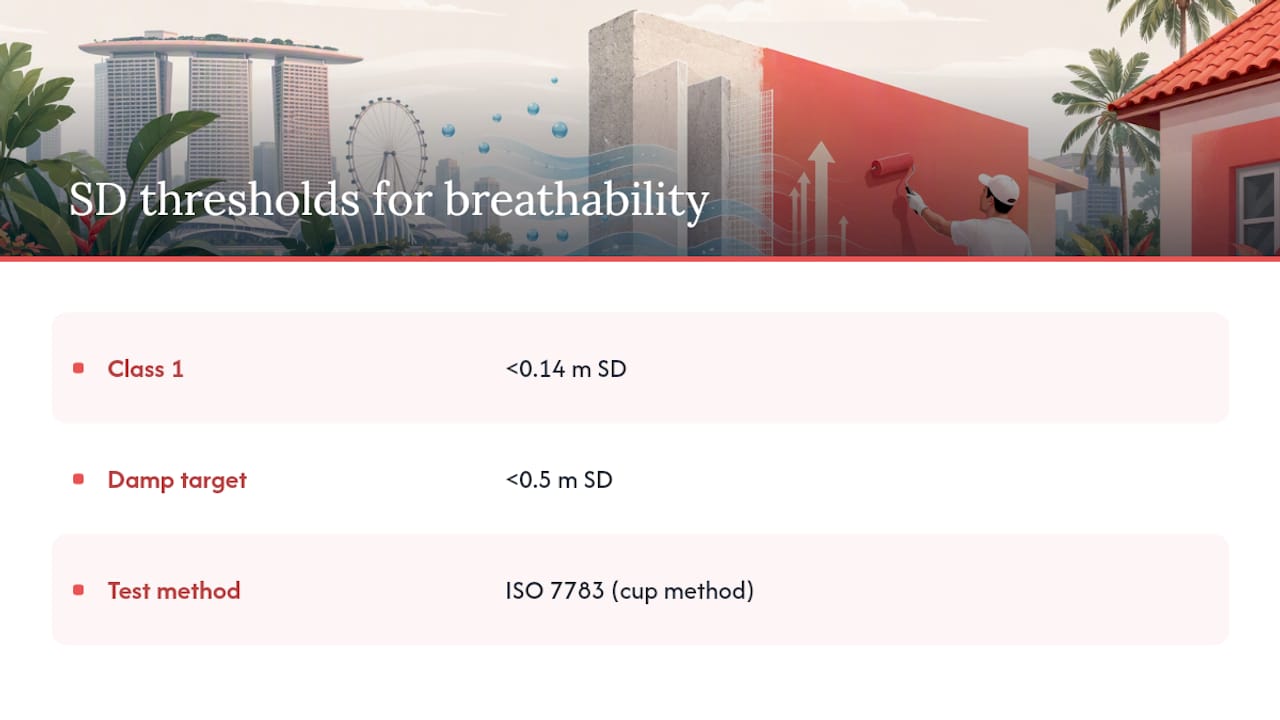
Ask any contractor or supplier for the SD or perm figure straight from the technical data sheet, tested under ISO 7783, before you commit to a product. A paint can claim “breathable” on the tin without ever publishing the number that proves it.
Preparing and Applying Breathable Paint Without Trapping Moisture
Getting this right is less about the paint and more about what happens before you open the can.
- Test before you assume. Use a moisture meter to get a real reading, and track down the source of any dampness rather than guessing. Thermal imaging can help spot hidden leaks behind finishes that look dry on the surface.
- Let the substrate dry fully. Concrete and solid masonry often need several days or longer to dry before sealing, and the timeline shifts with wall thickness, humidity, and season. Experienced contractors go by moisture-meter readings, not a fixed calendar date.
- Strip incompatible coatings. If the wall already carries an acrylic film, it usually has to come off before a mineral or lime-based finish can bond to the substrate underneath and let vapor exchange resume.
- Prime with a compatible product. Match the primer’s permeability to the topcoat, patch any damaged plaster, and clean the surface of dust, salts, or old paint flakes before you start.
- Apply and ventilate correctly. Follow the recommended number of coats, respect drying time between them, and keep the room ventilated during and after the job so vapor being released actually has somewhere to go.
- Bring in a professional for the hard cases. Recurring damp, active mold, large wall areas, or heritage substrates are situations where a diagnostic mistake is expensive to undo.
Pro Tip: Never close the door on a freshly painted room and walk away. Trapped humidity right after painting is one of the most common reasons breathable coatings fail early.
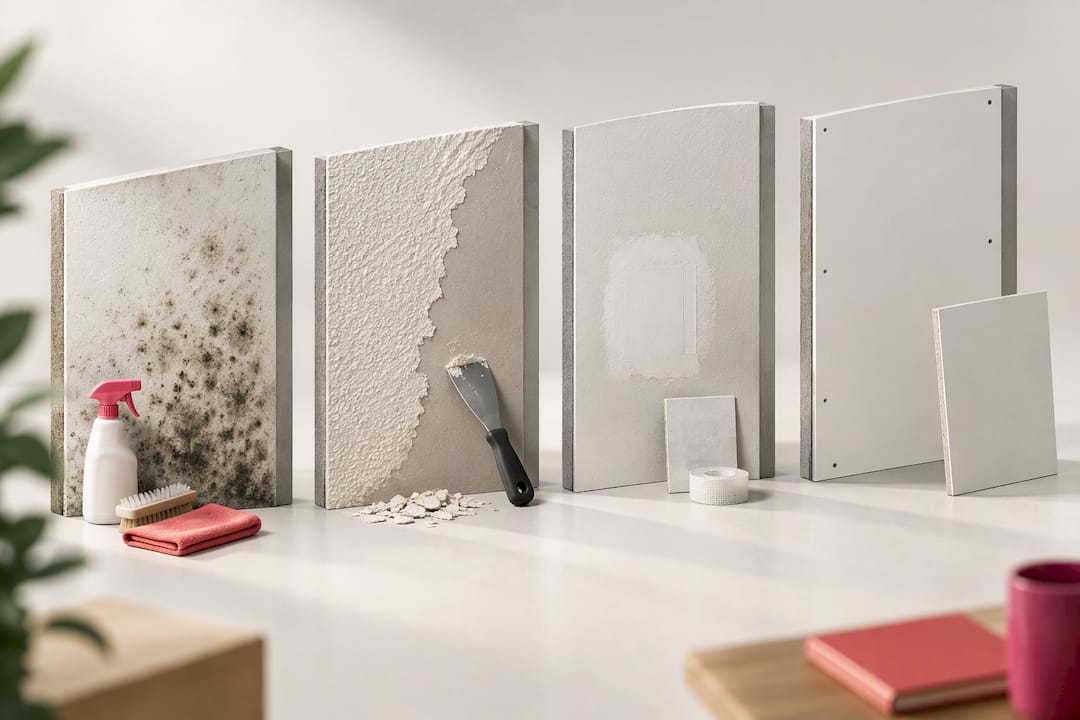
If mold shows up during prep, it needs proper remediation before painting starts, not paint applied over it. And if the wall already has an existing acrylic or textured finish, testing and removing it correctly matters more than the topcoat you eventually choose. For water-damaged drywall specifically, it’s worth knowing when repair is possible versus when replacement is the only real option.
How Professional Painters Approach Breathable Coatings
A contractor worth hiring starts with surface assessment, not a paint chart. That means checking moisture levels, matching primer systems to the substrate, and knowing when a wall’s history calls for a mineral finish over a standard emulsion. Professional painters build every job around that sequence, using high-quality paint, protecting furniture during work, and assigning a dedicated project manager so decisions on prep and product get made correctly the first time.
— Fabian
Getting Professional Help for Damp-Prone Walls
If your walls have a history of peeling, bubbling, or recurring damp patches, a DIY paint swap rarely solves the underlying problem the way a proper inspection does. Some painting services offer all-inclusive pricing across HDB and condo packages, covering labor, paint, surface preparation, furniture protection, and cleanup, with no hidden fees added after the quote.

Many professional painting jobs include a warranty and a dedicated project manager who oversees the work from assessment to final coat, which matters most when a wall’s moisture history needs a real diagnosis before anyone picks up a brush. Homeowners preparing an HDB flat can review the HDB Basic, Enhanced, and Premium packages, while condo owners can compare the Condo Basic, Enhanced, and Premium options built for multi-storey residential units. If your walls show recurring damp, flaking paint, or you’re just not sure which finish fits your substrate, request an inspection and get a straight answer before you commit to a product.
Standards and Guidance Worth Checking
Verify breathability claims against ISO 7783’s cup-method testing, review Keim’s technical explanation of mineral paint systems, and note that Singapore’s NEA formaldehyde limits take effect January 1, 2026.
Sources
- ISO 7783:2018 – Paints and varnishes — Determination of water-vapour transmission properties — Cup method
- Breathable Mineral Paint System: Protecting Your Home – Keim Residential Mineral Paints
- NEA media release – No formaldehyde in interior paints from 1 January 2026
- Breathable Paint | For Interior Walls & Lime Plaster – Greenshop Paints
FAQ
What brands of paint are breathable?
Breathability depends on the product line and formulation, not the brand name alone, so the SD or perm value on the technical data sheet is what actually confirms it. Mineral silicate and lime-based product lines are generally the most reliable category for genuine high breathability, while standard acrylic ranges vary widely even within the same brand.
Which paint is breathable for new builds?
New builds with cavity walls and built-in vapor barriers usually don’t need a highly breathable coating, since the wall system is designed around a sealed approach rather than natural moisture exchange. If a new build uses solid masonry or mineral plaster, a mineral silicate or lime-based finish still applies, but check the wall construction before assuming breathability is the priority.
What breathable paint works best on interior stone walls?
Mineral silicate paint is generally the strongest match for interior stone because it bonds chemically into the mineral surface and supports the wall’s natural moisture cycle. Limewash is a solid alternative on older stone walls with a lime-based mortar or render, particularly where a traditional matte finish is preferred.
Can I paint over damp walls with breathable paint?
No. Breathable paint manages residual moisture during drying after a leak has been fixed, but it doesn’t stop active water ingress. Painting over a wall with an unresolved leak or untested rising damp just delays the visible symptoms while the problem underneath continues.
Does 5starpainting handle walls with a history of moisture problems?
Yes. 5starpainting assesses surface condition and moisture before recommending a product or package, and every job includes surface preparation, genuine Nippon Paint, and a one-year warranty. Pricing for HDB packages and condo packages is listed on each service page, with landed property quotes available on request.