
Anti-condensation paint reduces surface sweating on cold walls, ceilings, and pipes near aircon systems, but it works best alongside a fix for the real cause. Products using glass microsphere technology or micro air cell coatings buy you time before dew forms, they do not stop moisture that’s coming from bad airflow, wet insulation, or a blocked drain. Before you buy a tin, run through the diagnostic checklist below, or have 5starpainting inspect the wall during a repaint quote.
TL;DR:
- Anti-condensation paint delays moisture formation but does not eliminate moisture sources like poor airflow, blocked drains, or wet insulation.
- These products work best on dry, firm surfaces with localized sweating during humid conditions and are ineffective for active leaks or icy coils.
- Proper surface preparation, including mold removal and patching, is essential for the coating’s longevity, with two coats generally recommended.
- Reapplication and maintenance are needed every few years, and persistent mold or soft plaster indicate underlying moisture issues requiring professional repair.
- Combining surface coatings with insulation upgrades and dehumidifiers offers a more comprehensive solution to condensation problems.
Table of Contents
- What Is Aircon Condensation Paint and How Does It Work?
- What Types of Anti-Condensation Products Are Available?
- When Does Paint Actually Help, and When Won’t It?
- How Do You Prep and Apply Anti-Condensation Coatings?
- What Does Coating Maintenance and Cost Actually Look Like?
- When Should You Call a Painting Professional?
- Are Condensation Control Paints Bad for Indoor Air Quality?
- Should You Use Paint, Insulation, or a Dehumidifier?
- The Real Lesson Buried in the Product Claims
- Get a Free Inspection From 5starpainting
- Sources
What Is Aircon Condensation Paint and How Does It Work?
Anti-condensation paint doesn’t seal out moisture the way a waterproofing membrane does. It changes how fast a cold surface reaches dew point, and that distinction matters for what you can realistically expect.
Most products rely on one of two mechanisms. The first is a thermal break: tiny air cells or glass microspheres suspended in the paint film slow heat transfer, so the wall or pipe surface stays a few degrees warmer than the surrounding cold source. Dryzone’s anti-condensation paint uses this approach, and the manufacturer states it can increase time-to-condensation by up to three times compared to standard paint. The second mechanism is moisture buffering, where linked micro-cells in the coating adsorb humidity from the air and release it later as conditions dry out, acting more like a sponge than a barrier, according to Asia Paint Singapore’s product description.
Neither approach creates a permanent vapor barrier. Manufacturers describe the effect as delaying or reducing condensation, not eliminating the moisture source. That’s an important distinction: if a pipe is running cold enough, or a room stays humid enough for long enough, dew still forms eventually. Coatings also have service temperature limits and need patch-testing on painted or plastic surfaces before full application, a caveat that shows up consistently across product data sheets.
What Types of Anti-Condensation Products Are Available?
Three product categories cover most aircon-related condensation problems, and each suits a different part of the system.
Thermal and moisture-buffering paints work on flat, painted surfaces like drywall and plaster ceilings. Ronseal’s anti-condensation paint is a common choice here, applied by brush or roller over interior walls and ceilings where mild sweating shows up around aircon vents. Dryzone’s microsphere formula falls into the same category and covers roughly 4 square metres per litre across two coats.
Spray-on anti-sweat coatings target pipes, valves, and fittings, the irregular shapes a roller can’t reach cleanly. NO SWEAT’s NS-1 spray uses micro air cell technology to create a thermal break directly on metal surfaces and dries to a paintable white finish, making it a favorite for refrigeration lines and copper piping.
Pipe-specific sprays like PipeWrap adhere to copper, stainless steel, and PVC, drying to a flexible, textured finish built for aircon and refrigeration lines.
- Thermal paints: flat walls, ceilings, low-slope surfaces
- Spray-on coatings: pipes, valves, tees, sensor wells
- Standard mildew-resistant topcoat: cosmetic mold recurrence with no active moisture source
If the wall only shows old staining and the moisture problem is already resolved, a mildew-resistant topcoat may be all you need, skip the specialist coating and save the cost.
When Does Paint Actually Help, and When Won’t It?
Coatings work when the moisture is a temperature problem. They fail when the moisture is a mechanical problem. Telling the two apart takes about ten minutes with a flashlight and a hand on the wall.
Signs paint will likely help:
- Light, localized sweating around vent edges or a short pipe run
- The substrate underneath is still firm, dry, and free of soft spots
- Condensation appears only during humid weather or heavy aircon use, not constantly
Red flags that mean paint won’t fix it:
- Water actively dripping, not just misting on the surface
- Wet or sagging pipe insulation
- A blocked or slow condensate drain leaving a puddle near the unit
- Ice building on the coil, usually a sign of low refrigerant
Common root causes behind aircon condensation include poor airflow, degraded pipe insulation, blocked drains, and refrigerant issues that cause coils to freeze. Work through the checks in this order:
- Check airflow around vents and grilles for obstructions.
- Inspect pipe insulation for gaps, tears, or waterlogging.
- Clear the condensate drain line of debris or algae buildup.
- Switch the unit to dry mode for a few hours and watch if sweating eases.
- Call a licensed HVAC technician if you suspect frozen coils or a refrigerant leak.
Pro Tip: An infrared thermometer costs less than a tin of paint and tells you exactly which spots on a wall sit below the dew point, so you can target the coating instead of coating the whole surface and hoping.
How Do You Prep and Apply Anti-Condensation Coatings?
Surface prep decides whether the coating lasts a year or five. Skipping it is the single most common reason these paints fail early.
Start by treating any visible mold with a fungicidal wash, then let the surface dry completely before touching it with paint. Damp substrate underneath a fresh coat is exactly the trapped-moisture scenario that causes peeling later. Scrape off loose paint or old wallpaper, and patch any soft or crumbling plaster before you open the tin.
Application follows a fairly consistent pattern across brands:
- Apply two coats for full thermal or buffering effect, not one.
- Ronseal’s product is touch dry in 1 to 2 hours and ready for a topcoat after about four hours, per manufacturer specs.
- Most anti-condensation paints accept a standard topcoat once cured, satin or semi-gloss finishes hold up better in humid rooms than flat matte.
- Some substrates, especially bare plaster or metal, need a primer or sealant first for proper adhesion, similar to the prep covered in paint sealant application.
- Patch-test spray coatings on a small painted area first, and ventilate the room while applying, especially with aerosol products.
Wear gloves and, for spray applications in a tight service area, a mask, fumes concentrate fast in a closet housing an aircon unit.
What Does Coating Maintenance and Cost Actually Look Like?
Anti-condensation paint isn’t a one-and-done fix. Expect to reassess it every few years, sooner if the room stays consistently humid.
- Lifespan signals: loss of adhesion, bubbling, or mold reappearing in the same spot usually means it’s time to recoat, not just clean.
- Maintenance: wipe down surfaces periodically with a mild detergent, mold spores settle into microtexture faster than on smooth conventional paint.
- Coverage: Dryzone lists roughly 4 square meters per liter across two coats, so a 2.5 liter tin covers a modest bathroom ceiling with some left over.
- Cost shape: specialist tins generally cost more per liter than standard interior paint, and a full professional job factors in labor and prep time on top of material.
If mold keeps returning after a DIY recoat, that’s usually a sign the root moisture problem was never solved, and it’s worth booking a proper surface remediation job instead of buying a third tin.
When Should You Call a Painting Professional?
Widespread mold, crumbling or soft plaster, or condensation that keeps returning after you’ve already fixed the drain and insulation are the clearest signs a wall needs more than a fresh coat. At that point, the substrate itself may be compromised, and DIY patching just delays a bigger repair.
A professional job starts with an honest diagnosis, not a paint recommendation. If the wall is still wet behind the surface, no coating fixes that until the moisture source is gone.
Professional painting services can include an on-site inspection, comprehensive surface preparation, and application using quality paint products, tailored to whether a specialist coating or a standard finish is needed. Projects often feature dedicated management, thorough cleanup, and a warranty to ensure the durability of the repair. [brand_signal] [author_bio]
Are Condensation Control Paints Bad for Indoor Air Quality?
Most anti-condensation paints sold today are water-based, which keeps volatile organic compound levels lower than older solvent-based formulas. That matters more in Singapore’s climate than it might elsewhere, because rooms with aircon condensation problems are often closed up for long stretches, exactly the conditions that let VOCs linger.
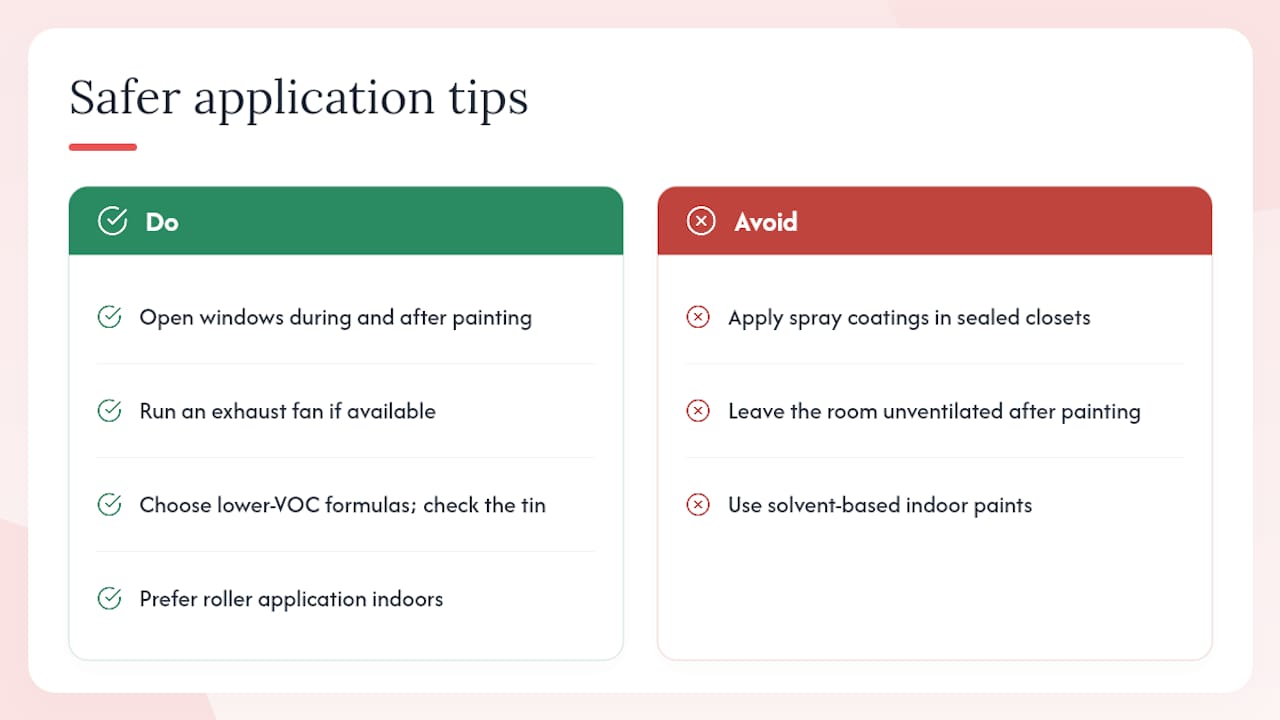
Water-based formulas, including the moisture-buffering type described by Asia Paint Singapore, generally off-gas less than oil-based alternatives and dry faster, shortening the window where fumes concentrate indoors. That said, spray-on coatings for pipes and metal fittings still carry stronger odor during application than a roller-applied wall paint, simply because aerosol delivery puts more product into the air at once.
Ventilation during and after application isn’t optional, it’s the difference between a room that airs out in a few hours and one that holds a chemical smell for days. Open windows, run an exhaust fan if the room has one, and avoid applying spray coatings in a sealed utility closet without airflow. If you’re choosing between two comparable products, checking the VOC content listed on the tin is worth the extra minute, lower VOC formulas are increasingly the default for interior wall and ceiling paints regardless of the condensation-control claim.
None of this changes the core function of the coating. A lower-VOC formula buffers or delays moisture the same way a higher-VOC one does, the difference is what you’re breathing while it dries.
Should You Use Paint, Insulation, or a Dehumidifier?
Paint, insulation upgrades, and dehumidifiers solve different pieces of the same problem, and the strongest results usually come from combining two of them rather than betting on one.
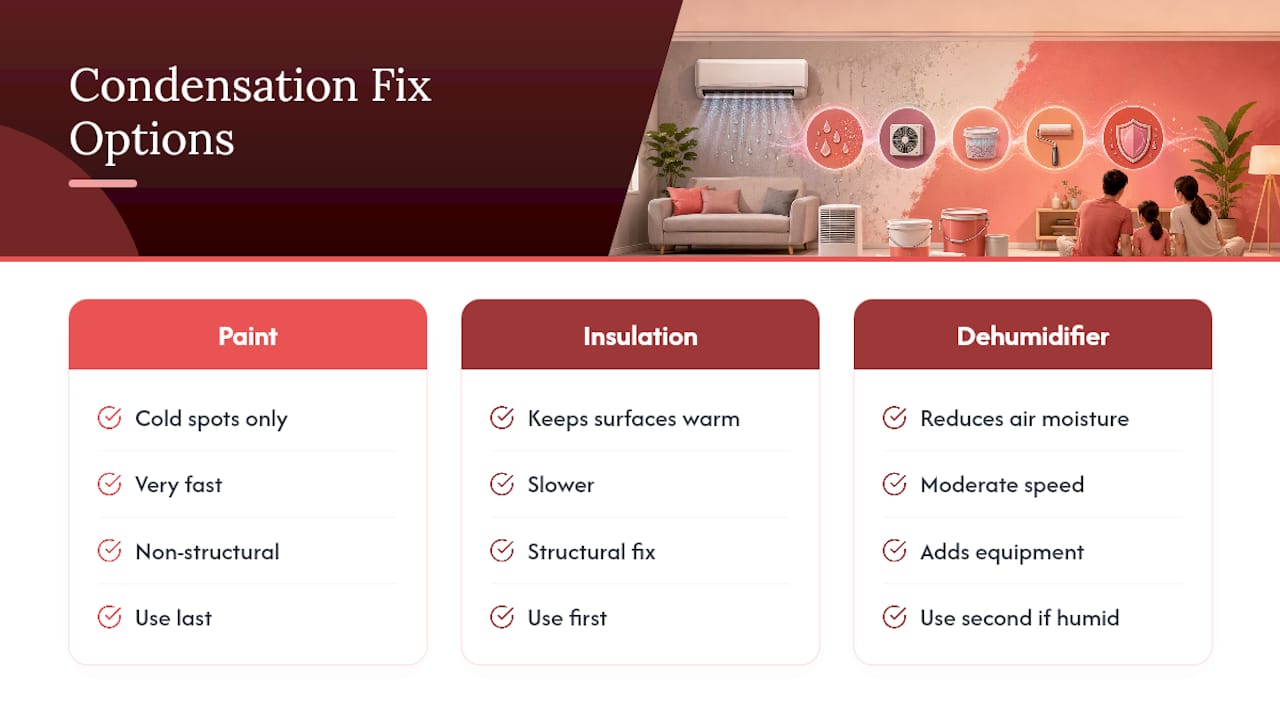
Anti-condensation coatings are the cheapest, fastest fix and require no structural work, brush it on, let it cure, done. Their weakness is that they only shift the timing of condensation, they don’t remove humidity from the air or stop a cold surface from being cold. Improving pipe or wall insulation attacks the root cause directly by keeping the surface temperature closer to room temperature in the first place, which is why insulation quality is central to condensation risk in any climate-controlled space. It costs more and takes longer, but it’s a structural fix rather than a cosmetic one.
Dehumidifiers address the other half of the equation: the moisture load in the air itself. If a room stays humid regardless of surface temperature, a dehumidifier reduces the amount of water vapor available to condense anywhere, walls, pipes, or windows. Routine HVAC servicing, checking insulation condition, clearing drains, and confirming refrigerant levels, often turns out to be the decisive fix, with paint acting as a supporting measure rather than the main event.
For most Singapore homes, the practical order is: fix the HVAC and insulation issues first, add a dehumidifier if humidity stays high, then use anti-condensation paint on any remaining cold spots that still sweat occasionally.
The Real Lesson Buried in the Product Claims
The marketing on these tins is more honest than most homeowners give it credit for, if you actually read past the headline. Every manufacturer specification sheet says the same thing in different words: these coatings buy time, they don’t remove moisture. That’s not a limitation to be annoyed about, it’s the entire design intent, and treating it as a flaw is where most DIY attempts go wrong.
The conventional advice online treats anti-condensation paint like a general damp-proofing product you slap on any wet wall. That’s backwards. The paint’s value is narrow and specific: it works on walls and pipes where the moisture source is temperature-driven and already mild. It does nothing for a blocked drain or a coil running low on refrigerant, no matter how many coats you apply.
If there’s one thing worth prioritizing before buying anything, it’s the ten-minute diagnostic. An infrared reading or even a careful visual check tells you whether you’re dealing with a coating problem or a mechanical one. Skip that step, and you risk repainting the same wall every eighteen months while the actual cause sits untouched behind the drywall.
— Fabian
Get a Free Inspection From 5starpainting
Skip the guesswork on whether your damp wall needs a specialist coating or a full repair. 5starpainting sends a project manager to inspect the affected surface, diagnose whether the issue is condensation, old water damage, or mold, and recommend either a targeted coating or a full repaint using genuine Nippon Paint, all under one fixed, all-inclusive quote with no hidden add-ons.

Every job includes full surface prep, furniture protection, cleanup, and a one-year warranty, so a damp patch doesn’t turn into a recurring expense. If you own an HDB flat, check the HDB painting service page for scope and starting prices. Condo owners can review the condo painting service page for pricing built around larger units and shared-wall considerations. Either way, request a quote and get an inspection booked before the next humid stretch makes the problem worse.
Sources
- No Sweat NS-1 | Anti Condensation Spray for Pipes & Metal
- Anti Condensation Paint | Asia Paint Singapore
- Dryzone Anti Condensation Paint