
Professional post-painting cleanup is normally included with a full-service residential painting job, and it should leave every room broom-clean and dust-free, with fixtures reinstalled, drips wiped away, and debris hauled out. If a contractor treats cleanup as an optional add-on, that’s a red flag before the first brush touches the wall.
A reputable crew’s cleanup routine covers:
- Removing drop cloths, tape, and plastic coverings
- Wiping fresh paint drips, splatters, and overspray off floors and trim
- Vacuuming or sweeping sanding dust
- Reinstalling outlet covers, switch plates, and hardware
- Hauling away trash and leftover materials
- Walking the site with you for a final review
Two signals separate contractors who take this seriously from those who don’t: all-inclusive pricing that already accounts for cleanup labor, and a single point of contact accountable for it. 5starpainting, for example, assigns a personal project manager to every job and prices cleanup into the quote up front, so it never shows up as a surprise line item later.
Key Takeaways
Professional post-painting cleanup should be written into the contract, verified at a room-by-room walkthrough, and confirmed against a fixed, all-inclusive quote before work begins.
| Point | Details |
|---|---|
| Cleanup is standard, not extra | Coverings removed, drips wiped, dust vacuumed, and fixtures reinstalled belong in every full-service quote. |
| Confirm scope in writing | Ask about dust containment, furniture repositioning, and paint disposal before signing the contract. |
| Inspect with a system | Check floors, corners, trim, and vents under both daylight and artificial light before sign-off. |
| Curing outlasts cleanup | Rooms are usable once dry to the touch, but full cure takes longer and needs gentle care. |
| 5starpainting bundles it in | All-inclusive pricing and a personal project manager fold cleanup and sign-off into one accountable process. |
Table of Contents
- What Does Professional Post-Painting Cleanup Actually Cover?
- How Do You Verify the Cleanup Was Done Right?
- What Should You Confirm Before the Job Starts?
- When Is a Freshly Painted Room Actually Ready to Use?
- How 5starpainting Handles Cleanup Expectations
- What’s the Right Approach to Disposing of Leftover Paint and Solvents?
- How Do You Spot Cleanup Problems That Aren’t Obvious at First Glance?
- Why Do Floor and Furniture Protection Protocols Matter So Much?
- Why the Cleanup Conversation Should Happen Before the Contract, Not After
- How to Get an All-Inclusive Quote That Covers Cleanup
- Frequently Asked Questions About Post-Painting Cleanup
- Sources
What Does Professional Post-Painting Cleanup Actually Cover?
A full-service paint job doesn’t end when the last coat dries. It ends when the crew has restored the space to something you’d want to walk into, and that involves a fairly specific sequence of tasks.

First, coverings come off. Drop cloths, painter’s tape, and plastic sheeting over furniture and floors get removed and bagged, along with any masking around outlets, vents, and trim. Full-service interior painting always folds this removal step into the closeout, not into a separate charge.
Second, the crew wipes down anything paint touched by accident. Drips on baseboards, overspray on window glass, small splatters on light fixtures. These get caught before they dry hard enough to need scraping.
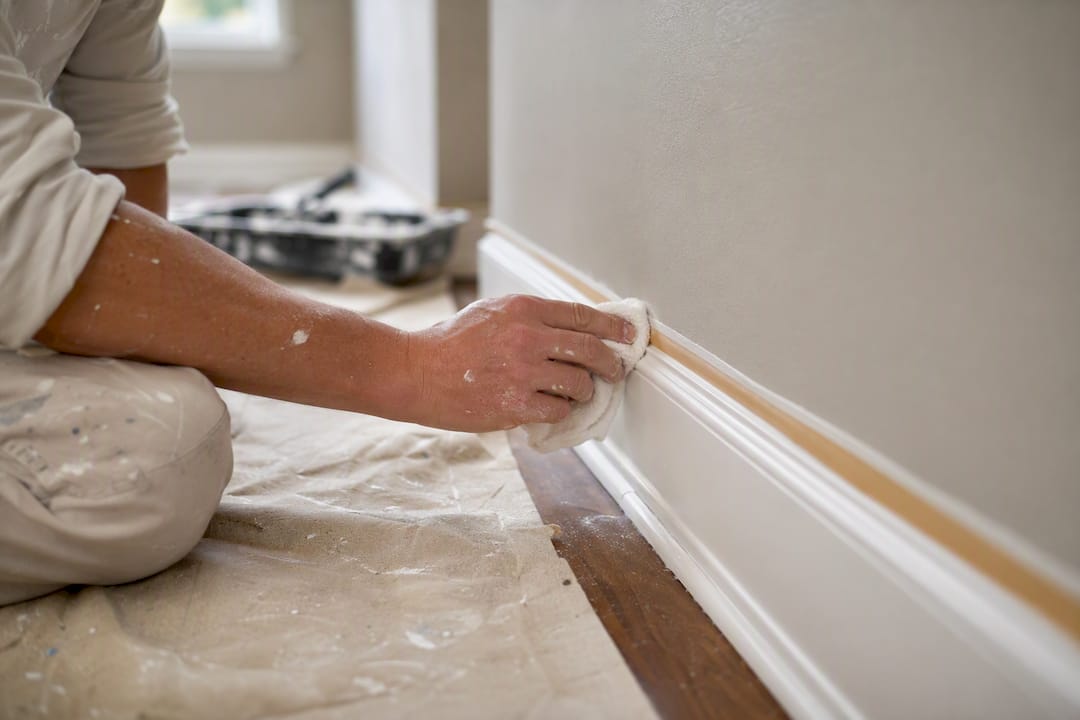
Third comes dust management. Any sanding, especially drywall patching or old paint removal, throws fine dust into the air that settles on every horizontal surface in the room. Crews vacuum or sweep this out, and on jobs with heavy prep work, they should use HEPA-filtered containment to keep dust from spreading to adjoining rooms in the first place.
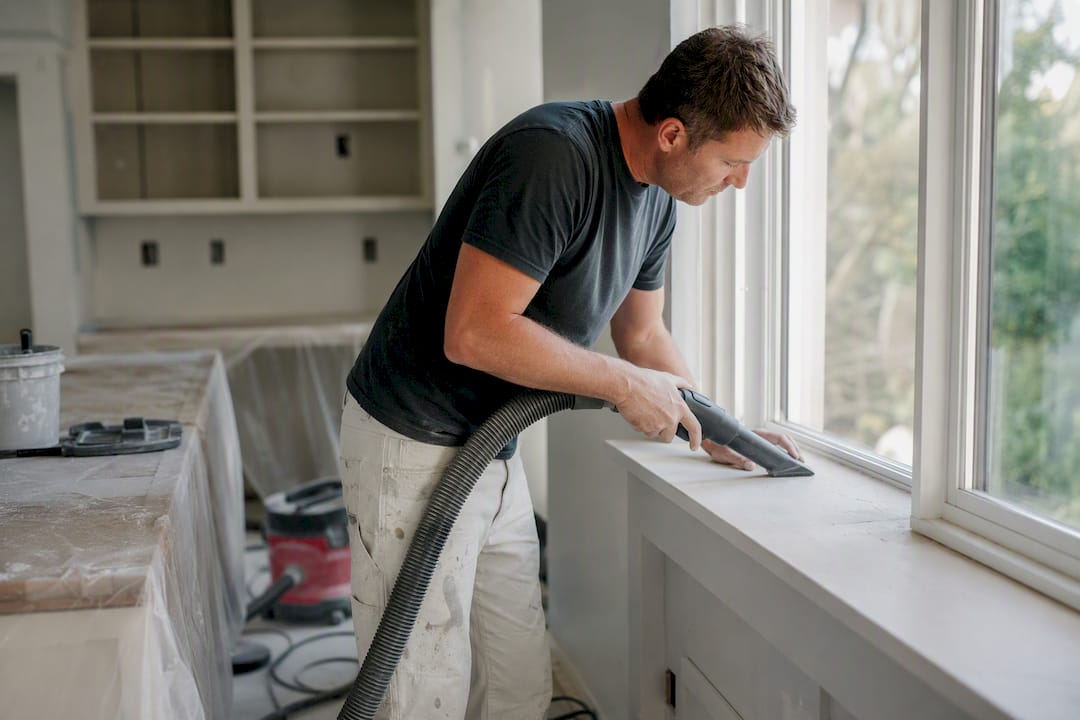
Fourth, hardware goes back on. Outlet covers, switch plates, curtain rods, anything removed for access gets reinstalled, and furniture moved for painting gets returned to its agreed position.
Fifth, leftover paint and materials get sorted. Some homeowners want a labeled can for touch-ups; others want everything hauled away. Either way, this should be settled before the job starts, not decided on the spot.
Finally, the crew inspects its own work, handles quick touch-ups, and preps for the walkthrough with you.
Pro Tip: Ask your contractor whether dust containment is standard on every job or only triggered above a certain amount of sanding. The answer tells you how they define “heavy prep” and what to expect if your job involves patching or wallpaper removal.
How Do You Verify the Cleanup Was Done Right?
The final walkthrough is where most disputes either get resolved or get started, so walk through with intention rather than a quick glance.
- Check floors and baseboards first. Look for paint drips, dust residue, or scuff marks left by ladders and equipment.
- Inspect corners and trim. These are the spots crews skip when they’re rushing, and where dried paint flecks tend to hide.
- Look at windows and glass. Overspray shows up clearly in daylight and is easy to miss under artificial light.
- Test switch plates and hardware. Confirm everything removed for painting is reinstalled and sits flush, not loose or crooked.
- Check vents and light fixtures. Dust settles here more than almost anywhere else in a freshly painted room.
- Photograph anything questionable. A quick photo on your phone documents the issue and gives the contractor a clear reference for the fix.
A visible dust layer on a windowsill, paint drips on the floor, or hardware that wasn’t reinstalled are all fail signs worth flagging immediately, not after the crew has packed up and left. Minor touch-ups can usually be handled on the spot in a few minutes. Anything larger, like a missed wall section or damaged flooring, warrants a scheduled follow-up visit noted in writing. Sign off only once you’ve walked the space yourself, and keep a copy of whatever acceptance document the contractor provides.
What Should You Confirm Before the Job Starts?
Most cleanup disputes trace back to one thing: nobody wrote down what “cleanup” actually meant before the painting began. Cleanup scope varies from contractor to contractor, so the estimate stage is where you lock in the specifics, not after the job is finished.
Ask directly:
- “Is final cleanup included in this quote, and what exactly does it cover?”
- “Will furniture be moved back into its original position, or left where it’s convenient?”
- “How is sanding dust handled, and is HEPA containment used for larger prep jobs?”
- “Who disposes of leftover paint, and can I get labeled cans for future touch-ups?”
- “If this is a multi-day job, is the site cleaned at the end of each day?”
Once you have answers, get them into the contract. Request a written final walkthrough sign-off clause, a clear leftover-paint policy, dust containment terms for any sanding work, and daily maintenance language if the job spans multiple days. If you agree to extras mid-project, get that in writing too, even if it’s just a text message confirming the change.
When Is a Freshly Painted Room Actually Ready to Use?
Cleanup and curing are two different clocks, and mixing them up causes a lot of unnecessary worry. Crews typically handle final cleanup once the last coat is dry to the touch, which usually happens within a few hours depending on the paint and ventilation. At that point, you can move back into the room for normal activity.
“Ready for regular use” is not the same as “fully cured,” though. Full cure can take longer, and the paint film is still hardening even after it looks and feels finished. During that window:
- Avoid hanging pictures or pressing tape against fresh walls
- Skip harsh cleaning products on painted surfaces
- Ventilate the room to help the finish set evenly
Learning how to clean painted walls properly during this stretch protects the finish long after the crew has gone. Heavier prep jobs, meaning more sanding or patching, naturally need more thorough dust control, so don’t judge a light touch-up job and a full drywall repair by the same cleanliness bar.
How 5starpainting Handles Cleanup Expectations
Everything above is easier to enforce when the contractor builds it into how they operate, rather than treating it as a favor.
5starpainting has run residential paint jobs across Singapore for over 30 years, and several features map directly onto the checklist homeowners actually need:
- All-inclusive pricing that covers labor, genuine Nippon Paint, furniture protection, and cleanup, with no hidden fees added after the fact
- A personal project manager assigned to each job, who owns the final walkthrough and sign-off
- Furniture and floor protection built into the standard process rather than billed as an extra
- A final walkthrough where touch-ups get addressed before the job is considered done
A named project manager matters more than it sounds. When one person owns the walkthrough, there’s no confusion about who to call if a drip gets missed, and no finger-pointing between crew members after the fact. All-inclusive pricing works the same way: when cleanup is baked into the quote instead of billed separately, there’s no incentive to rush it or skip it.
What’s the Right Approach to Disposing of Leftover Paint and Solvents?
Leftover paint, thinners, and solvents don’t belong in your regular trash, and a professional crew should know that without being asked. Latex paint that’s fully dried out can sometimes go in household waste depending on local rules, but wet paint, oil-based products, thinners, and solvents count as hazardous material almost everywhere.
The safest practice looks like this: leftover paint gets labeled clearly with the color name and room it was used in, then either handed to you for touch-ups or taken to a proper hazardous waste collection point. Thinners and solvents should never be poured down a drain or dumped outdoors. Reputable crews store these in sealed, labeled containers until they can be dropped at an approved facility.
If you’re unsure what your contractor plans to do with materials, ask directly during the estimate stage. “Who disposes of leftover paint and solvents, and how?” is a fair question, and a professional outfit will have a straightforward answer ready. Vague responses, or the suggestion that solvents will just go out with regular trash, are worth pushing back on.
This isn’t just an environmental courtesy. Improperly stored solvents are a fire hazard, and leftover paint left in unlabeled cans creates confusion months later when you’re trying to remember whether that gallon in the closet matches your living room wall. A little labeling now saves a headache at your next touch-up.
How Do You Spot Cleanup Problems That Aren’t Obvious at First Glance?
Some cleanup issues are visible immediately. Others hide until the light changes or you touch a surface days later.
Run your hand along a windowsill or shelf a day or two after the crew leaves. A fine grit under your fingers usually means sanding dust settled after the final vacuum pass, which happens more often in rooms with baseboard heaters or window units that recirculate air. Check under furniture edges and behind doors too, since these spots get skipped when cleanup happens quickly at the end of a long day.
Stains are trickier because they can take time to show. A faint discoloration on a ceiling near a light fixture, or a slightly darker patch on a wall, can indicate a drip that got wiped instead of fully removed, leaving a thin residue that dries into a visible mark. Check these areas under both daylight and artificial light, since paint residue often only becomes visible at certain angles.
If you spot something within the first few days, contact your contractor promptly rather than waiting. Most reputable crews will handle a documented issue with a quick touch-up visit if you flag it early. Waiting weeks makes it harder to prove the mark came from the job rather than everyday wear.
Why Do Floor and Furniture Protection Protocols Matter So Much?
Cleanup quality is decided before the first drop of paint hits a wall, not after. The standard protocol for protecting floors involves laying canvas or heavy-duty drop cloths across the entire work area, not just directly beneath where the crew is painting, since splatter travels further than most people expect.
Furniture either gets moved to the center of the room and covered with plastic sheeting, or relocated entirely if the room allows for it. Crews that skip this step and rely only on quick tape jobs around furniture edges are setting themselves up for a longer, messier cleanup later. Learning how to paint a ceiling safely, for instance, involves overhead protection that most homeowners don’t think to ask about until paint has already dripped onto a couch below.
Hard flooring needs a different approach than carpet. Canvas cloths grip better on tile and hardwood, while carpet often needs a plastic layer underneath the canvas to stop paint from soaking through fibers. Ask your contractor which materials they use for your specific flooring, since a one-size approach to protection often means one-size gaps in coverage.
Why the Cleanup Conversation Should Happen Before the Contract, Not After
Most homeowners treat cleanup as an afterthought, something to check once the painting’s done rather than something to negotiate up front. That’s backwards. The research on contractor disputes points to the same root cause over and over: cleanup expectations were never written down, so both sides assumed something different.
Here’s what I think gets underweighted in most advice on this topic: the walkthrough matters less than people assume, and the estimate matters more. By the time you’re standing in a freshly painted room deciding whether to sign off, you’ve already lost most of your leverage. The real protection happens weeks earlier, when you ask a contractor to put dust containment, furniture repositioning, and paint disposal into the contract in plain language.
Conventional advice tells homeowners to “do a thorough walkthrough,” which is fine but incomplete. A walkthrough only catches what’s visible that day. Dust that settles over the following week, or a stain that darkens as it fully dries, won’t show up in a five-minute inspection. Prioritize the paperwork first. The inspection is your backstop, not your main defense.
How to Get an All-Inclusive Quote That Covers Cleanup
If you’d rather not negotiate cleanup terms clause by clause, working with a contractor who already builds it into the quote solves the problem before it starts. 5starpainting’s packages include labor, genuine Nippon Paint, furniture protection, and full cleanup as standard, priced into the estimate rather than added afterward.

That means you skip the back-and-forth over what counts as “included” and go straight to reviewing a written scope with your assigned project manager, the same person who’ll walk the finished job with you and sign off on it. Whether you’re preparing an HDB flat or a condo for resale, you can request a site estimate with a clear cleanup checklist attached, and compare it against your own list from this article. For HDB flats specifically, check the HDB painting packages starting from $600, or the condo painting packages starting from $950, both structured around the all-inclusive model.
Pro Tip: When you book your estimate, ask for your project manager’s direct contact so you can schedule the final walkthrough yourself instead of waiting for a callback.
Frequently Asked Questions About Post-Painting Cleanup
Do painters clean up after finishing a job?
Yes. A reputable full-service painting contractor includes cleanup in the standard scope, covering coverings removal, drip wiping, dust vacuuming, and fixture reinstallation. If a contractor treats it as optional, get that clarified before signing.
What tools do professional crews use for post painting cleanup?
Shop vacuums or HEPA-filtered vacuums for dust, microfiber cloths for wiping drips, and putty knives for scraping dried splatter are standard. Heavy sanding jobs call for containment barriers to keep dust from spreading beyond the work area.
How long after painting should cleanup happen?
Final cleanup typically happens once the last coat is dry to the touch, often within a few hours. That’s separate from full curing, which can take considerably longer and requires gentler handling of surfaces.
What if I find paint drips or dust after the crew leaves?
Document the issue with a photo and contact your contractor right away. Most will schedule a quick touch-up visit, especially if the walkthrough sign-off included a clause covering post-job corrections.
Is dust cleanup different for jobs involving sanding?
Yes. Jobs with significant sanding or drywall repair produce fine dust that settles well beyond the immediate work area, so containment and HEPA vacuuming become more important than on a simple repaint.
Sources
- Full service interior painting what to expect from professionals – GREENHAUS Painting
- What to Expect During Your Professional Painting Project