
A painting warranty is either a workmanship promise from your contractor or a product guarantee from the paint manufacturer, and the two run on different clocks. Workmanship warranties typically cover 1 to 3 years, while manufacturer warranties on the paint itself can extend to 5 years or longer depending on the product line. If you’re getting quotes right now, your immediate move is simple:
- Ask for the warranty in writing, not a verbal promise
- Get the exact time period and what surfaces it applies to
- Confirm whether it’s the contractor’s workmanship or the paint maker’s product guarantee (often both, covering different failures)
Key Takeaways
A usable painting warranty depends less on its advertised length and more on written scope, documented prep, and clear exclusions that hold up when you actually file a claim.
| Point | Details |
|---|---|
| Know the two warranty types | Workmanship covers application errors; manufacturer warranties cover paint product defects. |
| Expect standard durations | Workmanship typically runs 1 to 3 years; manufacturer coverage can reach 5 years or more. |
| Watch for moisture exclusions | Roof leaks, plumbing failures, and standing water on decks are almost always excluded. |
| Demand written terms | Get the time period, covered failures, exclusions, and claims process in writing before hiring. |
| 5starpainting’s documentation model | Dated photos, batch numbers, and a named project manager back its one-year workmanship warranty. |
Table of Contents
- What Is a Painting Warranty and How Long Does It Last?
- Workmanship Warranty vs. Manufacturer Warranty: Who Covers What?
- What Does a Painting Warranty Cover, and What’s Excluded?
- How to Judge a Painting Warranty Before You Hire
- How Do You File a Painting Warranty Claim?
- Common Painting Warranty Scenarios: Covered or Excluded?
- What 5starpainting Documents to Reduce Warranty Disputes
- Frequently Asked Questions
- Sources
What Is a Painting Warranty and How Long Does It Last?
Warranty length isn’t random. It reflects how much confidence a contractor has in their prep work and how much margin they’ve built into the price to cover callbacks.
Interior workmanship warranties commonly sit at 1 to 3 years. Exterior workmanship, which faces sun, rain, and temperature swings, often runs 2 to 3 years. Manufacturer product warranties, covering things like premature fading or chalking in the paint formula itself, can stretch to 5 years or more on premium lines. Cabinets and decks are their own category entirely, and we’ll get to why below.
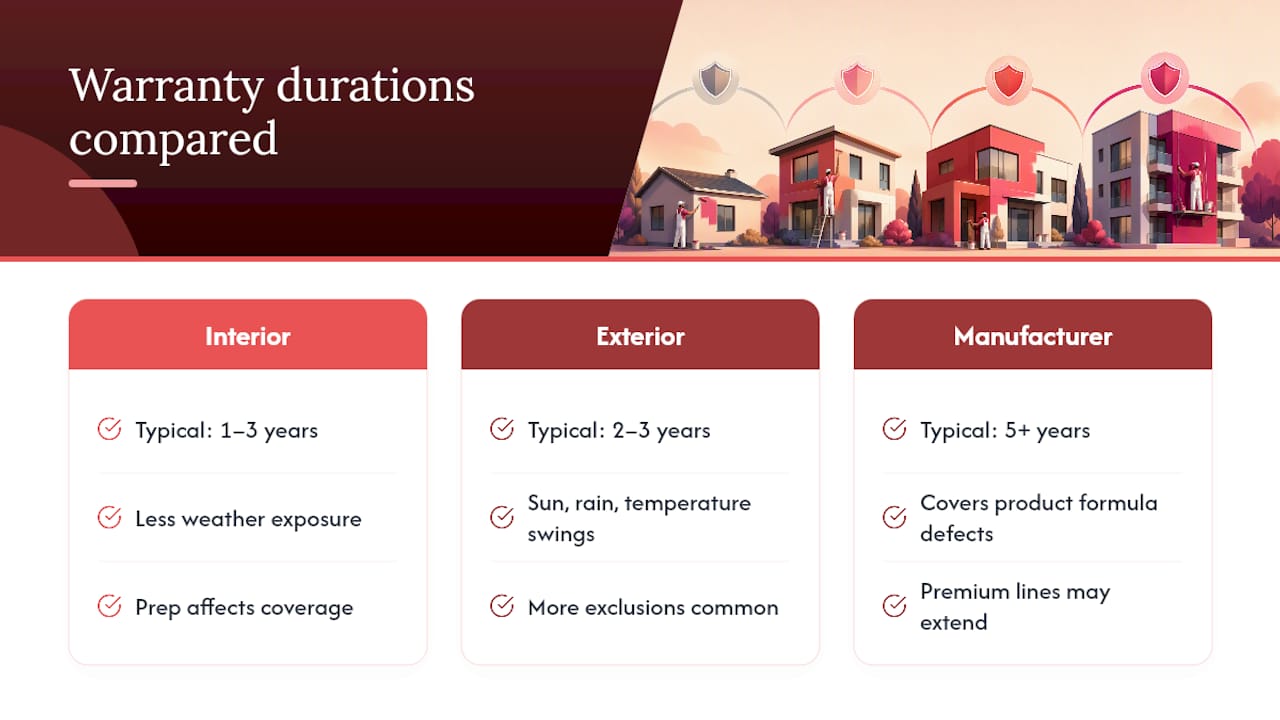
A 10-year workmanship warranty sounds great until you ask what’s excluded. A long warranty is only as good as the prep behind it. A contractor who skips sanding, priming, or caulking may still offer a lengthy warranty claim, but exclusions and fine print often limit actual coverage.
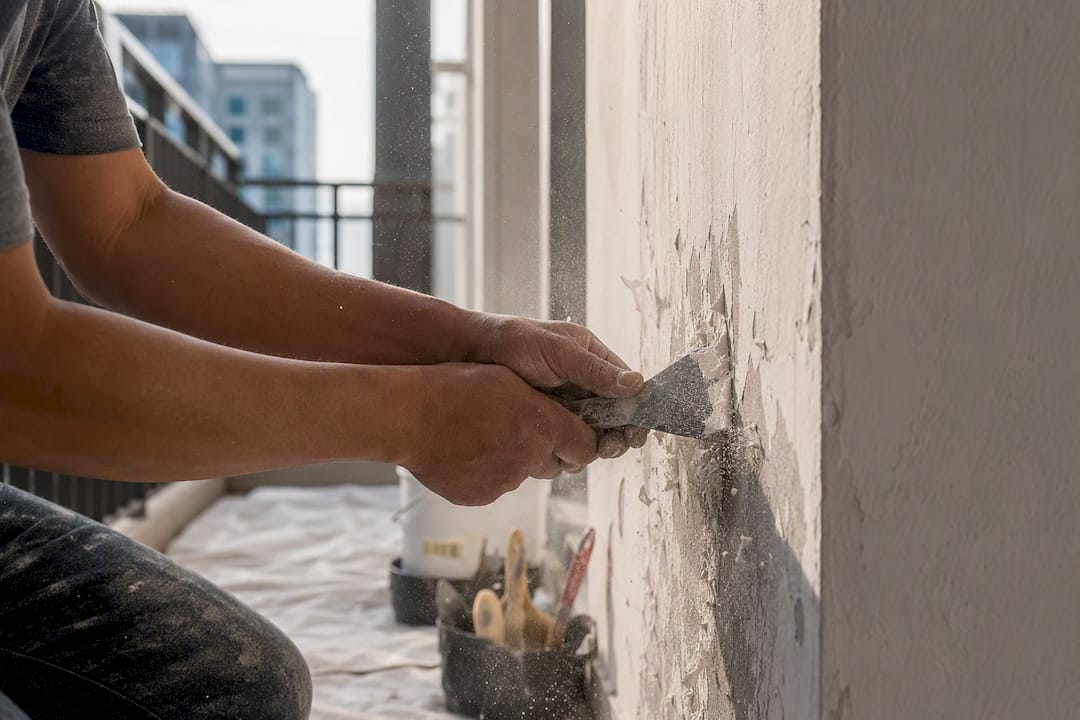
Surface orientation matters too. Vertical walls shed water and dry quickly. Horizontal surfaces like deck boards and stair treads trap moisture and take direct foot traffic, which shortens realistic life expectancy no matter what the warranty says.
Workmanship Warranty vs. Manufacturer Warranty: Who Covers What?
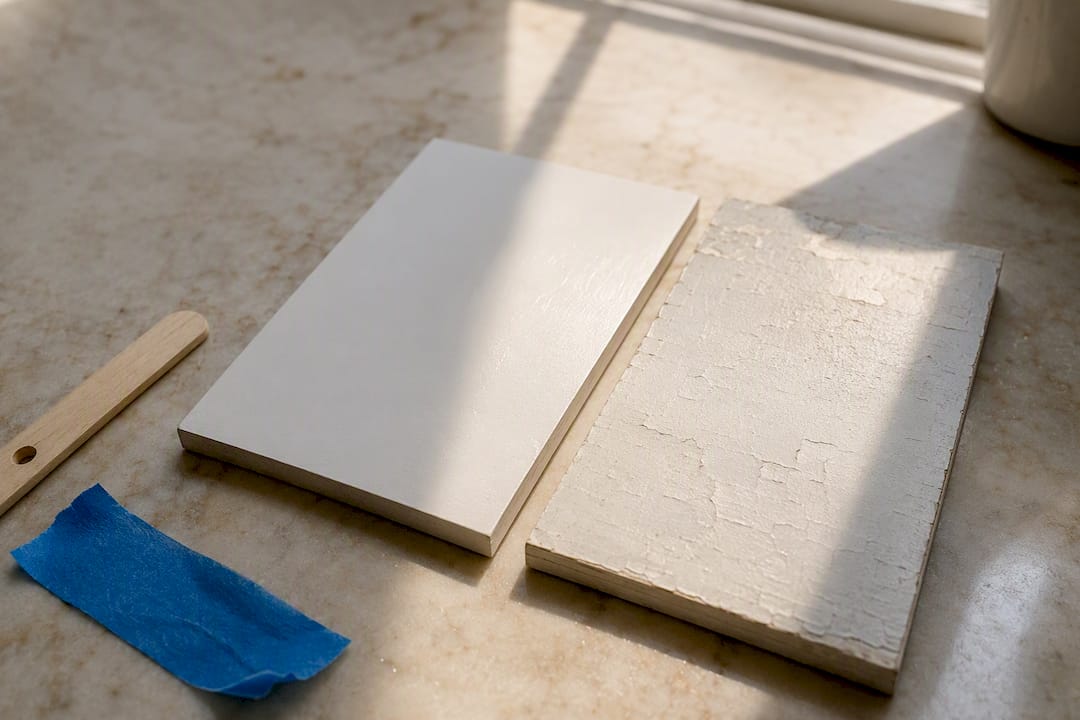
When paint fails, you need to know which door to knock on. A workmanship warranty is the contractor’s promise about how the job was done. A manufacturer warranty is the paint maker’s promise about the product itself. Mixing these up wastes time on a claim that goes nowhere.
Workmanship coverage handles application failures like peeling from poor surface prep, blistering from painting over damp wood, or adhesion failure when primer was skipped. Manufacturer coverage handles defects in the paint formula itself, like premature fading, chalking, or color shift that happens faster than the product specs promise.
If you suspect a product defect, you’ll need documentation to file a manufacturer claim:
- The exact paint brand, product line, and sheen
- Batch or lot numbers, usually printed on the can label
- Purchase receipt or the contractor’s invoice showing what was used
- Photos showing the specific failure and its location
Examples help clarify the split. Paint peeling off a wall shortly after application almost always points to workmanship. Paint that fades unevenly across a wall without visible application errors often points to a product issue. Reviewing paint grades and their durability before you sign helps you understand which coverage applies to which product tier.
What Does a Painting Warranty Cover, and What’s Excluded?
Most workmanship warranties cover a predictable list of failures tied directly to application quality:
- Peeling or flaking caused by inadequate surface preparation
- Blistering from moisture trapped under the paint film during application
- Adhesion failure where paint separates cleanly from the substrate
- Uneven coverage or visible lap marks from rushed application
Exclusions are where most disputes start. Reputable warranties exclude moisture intrusion from roof leaks or plumbing failures, substrate problems that existed before the paint job, normal wear and UV fading, and horizontal surfaces like deck boards, which face standing water no coating can fully resist.
Pro Tip: If your contractor flags a pre-existing risk, like a damp basement wall or a deck with rot, get that noted in writing before work starts. It protects you both and prevents a legitimate exclusion from becoming a fight later.
How to Judge a Painting Warranty Before You Hire
The best time to evaluate a warranty is during the estimate, not after something fails. A usable warranty document needs five things spelled out clearly: the time period, exactly which failures are covered, exactly which are excluded, the claims process, and whether the warranty transfers to a new owner or ends with you.
Before signing, ask for:
- Photos of surface prep, not just the finished result
- A written list of paint products and batch numbers used on your job
- A signed scope of work that notes any surfaces you declined to have prepped
- The name and direct contact of whoever handles claims
Written warranties with documented evidence resolve disputes faster because there’s no argument about what was promised. Verbal warranties protect nobody, since “we stand behind our work” with no timeframe or scope attached means whatever the contractor decides it means later.
Pro Tip: Treat a vague warranty pitch as a red flag, not reassurance. A contractor who can’t hand you specific written terms on the spot usually can’t back them up either.
How Do You File a Painting Warranty Claim?
A claim moves faster when you come prepared instead of just calling and describing the problem.
- Photograph the failure with a date stamp, from multiple angles
- Pull your original invoice and any leftover paint cans for reference
- Notify the contractor in writing as soon as you notice the issue
- Ask for a specific inspection date and repair timeline
Expect an initial response within a few business days, followed by an inspection and a repair decision shortly after. Interior repairs typically schedule within weeks. Exterior repairs can stretch to a couple of months if weather won’t cooperate. If you suspect a product defect rather than an application error, the manufacturer will usually ask for the same batch numbers and photos before opening its own claim.
Common Painting Warranty Scenarios: Covered or Excluded?
Mapping your situation to a likely outcome saves you a frustrating call.
- Interior wall peeling three months after handover: Usually a covered workmanship claim, since it points to prep or application error, not aging.
- Peeling that appears after a hidden roof leak is discovered: Likely excluded, because the failure traces back to moisture intrusion rather than the paint job itself. A roof warranty covering the leak matters more here than your paint warranty.
- A premium exterior paint fading unusually fast within a year: Possibly a manufacturer product claim if the batch and application meet the maker’s warranty conditions.
- Deck boards showing lifted finish after a rainy season: Often excluded entirely, since horizontal wood surfaces carry separate, shorter terms or no long-term coverage at all.
What 5starpainting Documents to Reduce Warranty Disputes
A warranty is only useful if there’s a paper trail behind it. 5starpainting builds that trail into every job as standard practice, not an add-on.
Every project includes:
- Dated photos of prep work and the finished job at handover
- A documented scope of work specifying surfaces and treatment
- Recorded paint brand, line, and batch information for every can used
- A named project manager who stays your point of contact for the one-year workmanship warranty
All-inclusive pricing means prep, genuine Nippon Paint, furniture protection, and cleanup are covered upfront rather than upsold later, which removes the financial incentive to cut corners on preparation. That thorough prep is exactly what keeps callback rates low in the first place.
How Should You Weigh Warranty Length Against Contractor Transparency?
A five-year warranty from a contractor who won’t show you prep photos is worth less than a one-year warranty backed by documentation. Length is a headline number; documented scope and honest exclusions are what actually determine whether a claim gets honored.
Use warranty length as a tie-breaker between two contractors who are otherwise equal on transparency, never as the deciding factor on its own. Insist on written terms before you insist on longer ones.
Get a Documented Warranty With Your Next Paint Job
5starpainting gives you what most quotes leave out: a fully documented job file, not just a number on a contract. Every project comes with dated prep photos, a written scope of work, recorded paint batch details, and a personal project manager who’s still reachable when your one-year workmanship warranty is active. That paper trail is what turns a warranty from a marketing line into something you can actually use.

If you’re preparing an HDB flat for move-in or resale, HDB painting services start at $600 with all-inclusive pricing, covering labor, genuine Nippon Paint, and cleanup with no hidden fees. Condo owners can check condo painting packages starting at $950 for the same documented approach. Request a quote today and ask directly for the prep photos and scope of work before you sign anything.
Frequently Asked Questions
How long do painting warranties typically last?
Workmanship warranties usually run 1 to 3 years for interior work and slightly longer for exterior jobs. Manufacturer product warranties on the paint itself can extend to 5 years or beyond.
Is a painting warranty transferable to a new homeowner?
Most warranties are non-transferable by default and apply only to the original customer at the original address unless the contract explicitly includes a transfer clause.
What voids a paint manufacturer’s warranty?
Skipping required steps like registration, a specific primer, or the minimum number of coats can void a manufacturer’s product warranty even when the correct paint was used.
Does a painting warranty cover fading from sunlight?
Usually not. Normal weathering like UV fading and chalking is typically excluded unless the manufacturer specifically warrants against rapid, premature fade.
Why are deck and horizontal surfaces excluded from most warranties?
Standing water and constant foot traffic make long-term adhesion on horizontal wood unreliable, so many contractors offer shorter terms or no warranty at all for these surfaces.
Sources
For manufacturer-specific language, see how warranties should be worded and what a 2-year workmanship warranty covers. For pricing context on all-inclusive packages, check how much house painting costs in Singapore.
- Painting Warranty: What to Offer and How to Word It
- The Truth About Painting Warranties: What Does a 2-Year Workmanship Warranty Actually Cover?
- Painting Warranties Explained: What’s Actually Covered (And What Isn’t)
- Limited Warranty Information | Ace Hardware Painting Services