
A reliable painting quote breakdown always shows three things clearly: labor, materials (named paint products, not just “paint”), and the preparation or repair work required. If any of those three buckets is missing or vague, ask for a revised quote before you sign anything.
Insist on a written scope of work with a line-item breakdown. Without it, you cannot fairly compare one bid against another, and you have no record of what was promised if the finish disappoints.
When a quote lands in your inbox, check these three things first:
- Does it name the actual paint product and line (not just “premium paint”)?
- Does it state the number of coats and whether primer is included?
- Does it list a warranty period and what it covers?
If those three boxes are checked, you’re looking at a quote worth taking seriously.
Key Takeaways
A trustworthy painting quote breakdown always separates labor, named materials, and preparation into distinct, itemized lines you can compare across bidders.
| Point | Details |
|---|---|
| Three core buckets | Every quote should clearly separate labor, named materials, and prep or repair work. |
| Prep drives durability | Patching, sanding, and priming determine how long a paint job actually lasts. |
| Normalize before comparing | Align surfaces, coats, prep, and paint lines across bids before comparing price. |
| Watch for vague phrasing | Terms like “as required” or “subject to site conditions” should be converted to fixed line items. |
| 5starpainting’s approach | Offers all-inclusive HDB and condo packages with named Nippon Paint products, a dedicated project manager, and a stated warranty. |
Table of Contents
- What drives the price in a painting quote breakdown
- How to read a painting quote: line items and what each means
- How to calculate an estimate yourself: a quick sanity check
- Hidden costs and red flags to watch for
- A repeatable workflow to compare multiple quotes
- Sample estimate structure and what to request
- How a professional, all-inclusive quote looks
- Permit and inspection fees if applicable
- Waste disposal and cleanup charges
- Sources
What drives the price in a painting quote breakdown
Two contractors can walk through the same condo unit and hand you numbers that differ by hundreds of dollars. The gap usually comes down to four things: labor, prep, materials, and overhead.
Labor cost isn’t just an hourly wage. Contractors price a “burdened rate,” which folds in insurance, taxes, equipment, and downtime, not just the painter’s take-home pay. Crew productivity also swings the math. A two-person crew that paints 200 square feet an hour finishes a job in half the time of a crew working at 100 square feet an hour, even though both quote the same square footage.
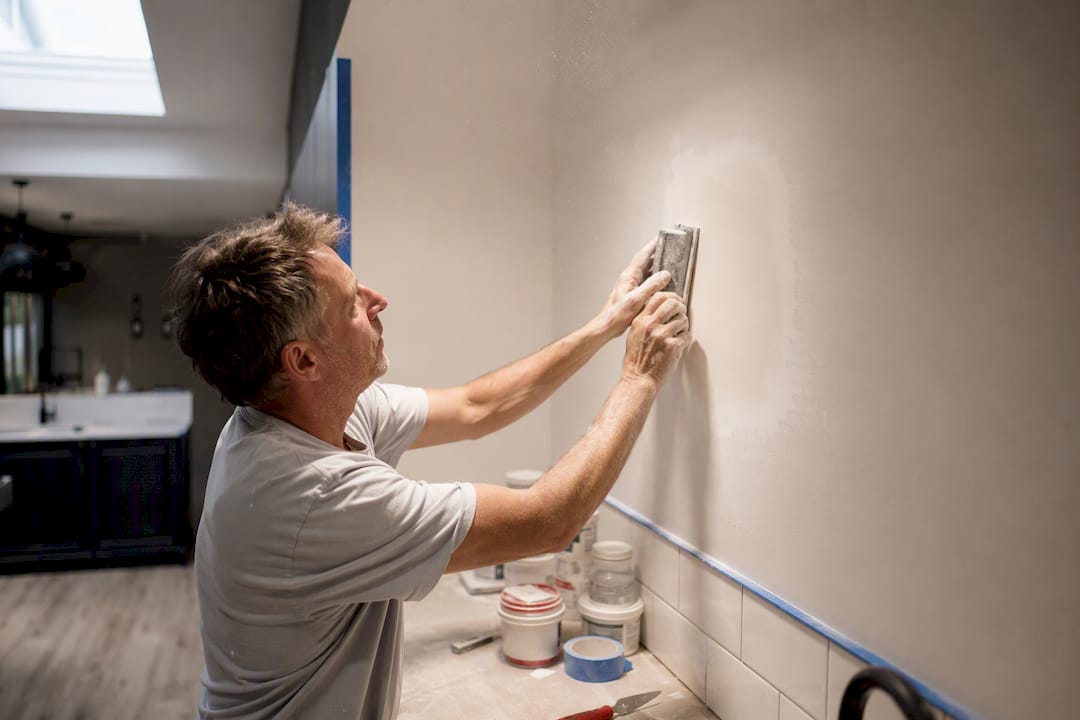
Preparation is where quotes diverge the most, and it’s the part homeowners underestimate. Patching nail holes, sanding rough patches, and priming stained walls all take time that never shows up once the paint is dry. A contractor who budgets three hours for wall prep on a resale flat is either working faster than physics allows or planning to skip steps. Prep work is also what determines whether your paint job lasts three years or ten, since paint bonds poorly to dust, grease, or unsealed patches.
Material choice matters more than most people expect. A standard interior emulsion costs less per gallon than a scrubbable, low-VOC, or specialty coating, and that difference multiplies across a three-bedroom flat. According to sample estimate breakdowns from real painting jobs, material costs typically run well below labor as a share of the total, which is exactly why an unusually cheap quote should raise questions about what corners got cut elsewhere.
Finally, scale and access change the math. Ceilings, staircases, and units above the second floor often require scaffolding or extension equipment, and every color change adds a coat. Overhead and profit, typically layered on at the end, cover insurance and business costs that keep the company able to honor its warranty next year, not just this week.
How to read a painting quote: line items and what each means
A professional painting quote analysis starts by matching what’s written against a checklist. Here’s what should appear, in order:
- Header and credentials. Business name, license or registration number, insurance status, and contact details.
- Scope of work. Every room and surface listed by name, with measurements or unit counts, not a vague “interior painting” line.
- Prep and repair items. What’s patched, sanded, or caulked, and just as important, what’s explicitly excluded.
- Paint specification. Brand, product line, sheen (matte, eggshell, satin), and number of coats per surface.
- Labor. Hours or a per-area basis, sometimes with a note on the burdened rate behind the number.
- Overhead, profit, timeline, payment terms, warranty, and exclusions.
Contractor estimating guidance is direct on this point: vague language invites scope gaps and change orders down the line. If a quote says “walls and ceiling, as required,” that phrase alone should prompt a follow-up call.
Pro Tip: Ask the contractor to write the number of coats directly next to each surface, not just once at the top of the quote. Some jobs need two coats on new drywall and one touch-up coat on repainted walls, and a single blanket number hides that difference.
How to calculate an estimate yourself: a quick sanity check
You don’t need a contractor’s software to sanity-check a bid. A rough painting cost estimator calculation takes about ten minutes.
- Measure wall area. Multiply each wall’s length by height, add the walls together, then subtract door and window openings (roughly 20 square feet per door, 15 per window).
- Add ceiling and trim. Multiply the room’s length by width for ceiling area, and measure linear footage of baseboards and trim separately.
- Calculate paint needs. One gallon typically covers 350 to 400 square feet per coat on smooth drywall; textured or porous surfaces cover less and may need a separate primer coat.
- Estimate labor hours. Estimator workflows suggest working from a production rate, then applying a burdened crew rate rather than a bare hourly wage.
- Add prep hours and markup. Tack on honest time for patching and sanding, then apply the contractor’s overhead and profit margin to reach a final number.
| Step | What to measure | Rough rule of thumb |
|---|---|---|
| Wall area | Length x height, minus openings | Standard bedroom: 350–400 sq ft |
| Paint coverage | Gallons needed | 1 gallon per 350–400 sq ft per coat |
| Labor | Crew hours at burdened rate | Varies by production rate and access |
| Markup | Overhead + profit | Applied after labor and materials total |
This math falls apart fast once specialty coatings, rot repair, or difficult access enter the picture, and that’s exactly when a professional scope of work earns its cost.
Hidden costs and red flags to watch for
A painting quote analysis isn’t complete until you’ve hunted for what’s missing, not just what’s listed. Some bids that seem cheapest initially may become more costly once omissions and additional charges arise during the project.
Watch for these gaps:
- Scaffolding or elevated work platform charges added after the job starts, not quoted upfront.
- Specialty coatings (fire-rated, anti-mold, textured finishes) priced separately without warning.
- Extensive repairs like water damage or rot that “may” cost extra, with no dollar range attached.
- Extra touch-up visits billed individually instead of included for a defined period.
Phrases like “as required,” “approved equal,” or “subject to site conditions” sound reasonable but leave the door open for surprise charges. Ask the contractor to convert each vague phrase into either a fixed inclusion or a separately priced option in writing.
Payment terms deserve careful scrutiny. Deposits that seem high before work begins, unclear warranty duration, or missing proof of insurance are signals to ask direct questions before signing.
A repeatable workflow to compare multiple quotes
Comparing three quotes side by side only works if you’re comparing the same job three times, not three different jobs that happen to be for the same flat.
- Align surfaces and coats. Confirm each bid covers the same rooms, ceilings, and trim, with the same number of coats.
- Align prep. Check that patching, sanding, and priming are described the same way, not assumed in one quote and itemized in another.
- Align materials. Match paint brand and product line, since a budget line and a premium line from the same brand can cost noticeably different amounts per gallon.
- Compare the extras. Line up timeline, warranty length, included touch-ups, leftover maintenance paint, and exclusions.
A simple spreadsheet with one row per line item and one column per contractor makes omissions jump out immediately. Normalizing scope before comparing price is the step most homeowners skip, and it’s the one that prevents a low headline number from hiding a stripped-down job.
Pro Tip: A higher bid is often justified when it includes a named premium paint line, a longer warranty, or a dedicated project manager overseeing the job daily. Those aren’t padding, they’re the reason the price is different.
Sample estimate structure and what to request
When you ask for a revised or itemized quote, request these sections by name: header with license and insurance, project details, surface-by-surface scope, prep and repair items, paint products with brand and line, labor basis, overhead and profit, payment schedule, timeline, warranty, exclusions, and change-order terms.
A deposit of 10 to 30% at signing, with the balance due at milestones or completion, is a common and reasonable structure. Ask contractors to label optional extras, like accent walls or specialty coatings, as separate line items rather than folding them into the base price.
How a professional, all-inclusive quote looks
Homeowners often ask what a trustworthy quote actually looks like in practice. 5starpainting has spent over 30 years answering that question for HDB, condo, and landed property owners across Singapore, and the answer starts with removing guesswork from the process.
An all-inclusive quote that names the paint, assigns a personal project manager, and states a clear warranty period gives homeowners a document they can hold a contractor to, not just a price they hope covers everything.
Every quote should map back to genuine Nippon Paint specification, furniture protection, full cleanup, and a stated warranty length, the same checklist you’d apply to any contractor’s bid.
Permit and inspection fees if applicable
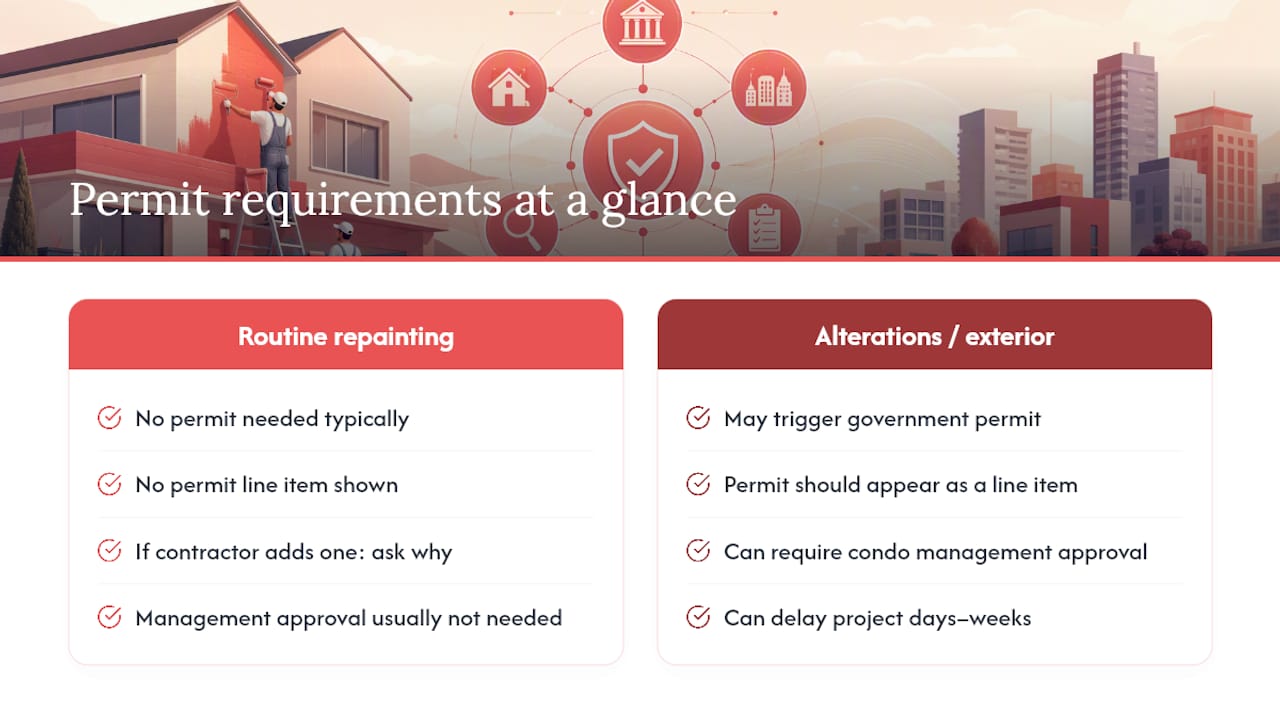
Most interior repainting projects for HDB flats, condos, and landed homes in Singapore don’t require a permit, since repainting existing surfaces in their current color scheme is considered routine maintenance rather than renovation work. You won’t typically see a permit line item on a standard interior painting quote breakdown, and a contractor who adds one for basic repainting deserves a direct question about why.
Permit requirements change if your project extends beyond painting into structural or exterior alterations. Exterior work on landed properties, changes to common areas in a condo, or any renovation that involves modifying walls or facades can trigger approval requirements from the relevant building authority or your condo’s management corporation. If your painting project is bundled with other renovation work, ask your contractor directly whether any portion of the job requires a permit and who is responsible for filing it.
Condo owners have an added layer to check: many management corporations require advance notice or approval before exterior or common-area painting work begins, even without a government permit. This isn’t a fee so much as a timeline item, but it can delay a project by days or weeks if it’s not flagged early. Ask your contractor and your management office directly rather than assuming the painting company will handle this coordination automatically. If a fee or approval step does apply, it should appear as its own line in the quote, not buried inside “miscellaneous costs.”
Waste disposal and cleanup charges
Cleanup is one of the most commonly excluded items in painting quotes, and it’s rarely obvious until the last coat dries and you’re staring at paint-splattered drop cloths, empty cans, and dust everywhere. A complete painting project pricing breakdown should state explicitly whether daily cleanup and final disposal are included or billed separately.
Paint cans, used rollers, tape, and plastic sheeting all count as waste that needs proper disposal, and larger jobs generate more of it than most homeowners expect. Some contractors fold this into their base price. Others treat it as an add-on, especially for larger units or landed properties where waste volume is higher. Neither approach is wrong, but the quote needs to say which one applies to your job.
Ask specifically whether furniture protection and dust control during the job are included, and whether the crew removes all debris and leftover materials at completion, or just sweeps the floor. A contractor who includes full cleanup as standard, rather than as a paid add-on, is signaling that they see the finished job as more than just wet paint on a wall. That distinction is worth confirming before you sign, not after the crew has already packed up and left.
First-person note: why itemized quotes matter
We insist on itemized scope-of-work documents because vague quotes create disputes after the paint dries, not before. At your site visit, ask for a room-by-room checklist and a written final-walkthrough clause. That single request tells you more about a contractor’s professionalism than any price quoted over the phone.
— Fabian
How 5starpainting can help you request an itemized quote
If you’re comparing quotes for an HDB flat, condo, or landed property, 5starpainting builds every estimate around the same three buckets this article covers: labor, named materials, and prep, spelled out line by line rather than bundled into one number. Every package includes genuine Nippon Paint, a dedicated project manager, furniture protection, full cleanup, and a warranty stated upfront, so there’s nothing to discover later.

HDB packages start from a published all-inclusive rate, and condo packages follow the same transparent structure, so you can compare our itemized quote against any other bid using the exact checklist in this article. If you’re ready to see what a fully itemized estimate looks like for your unit, request a quote for your HDB flat or check the condo painting package details to get a site visit scheduled.